Arcadia Bees
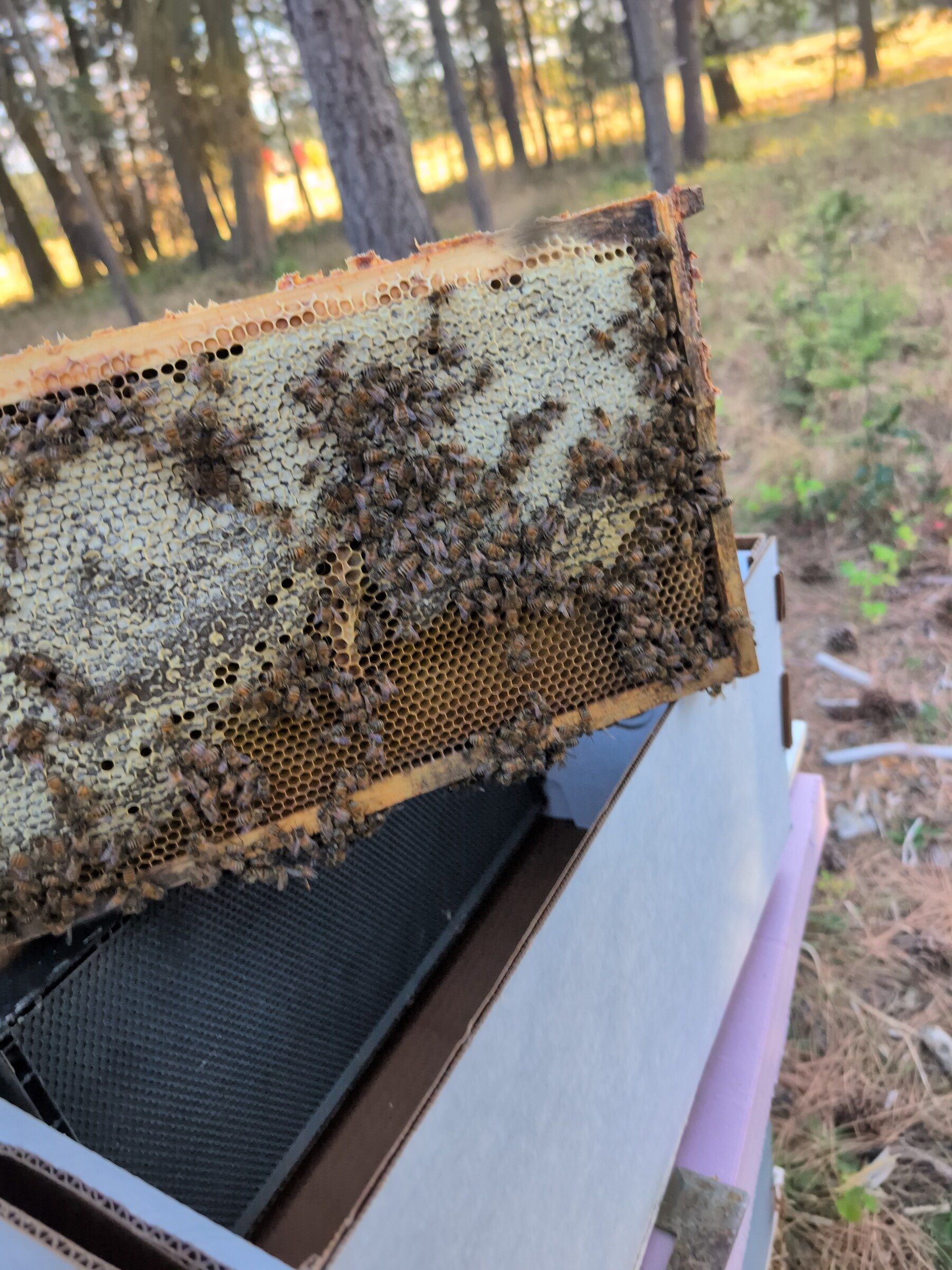
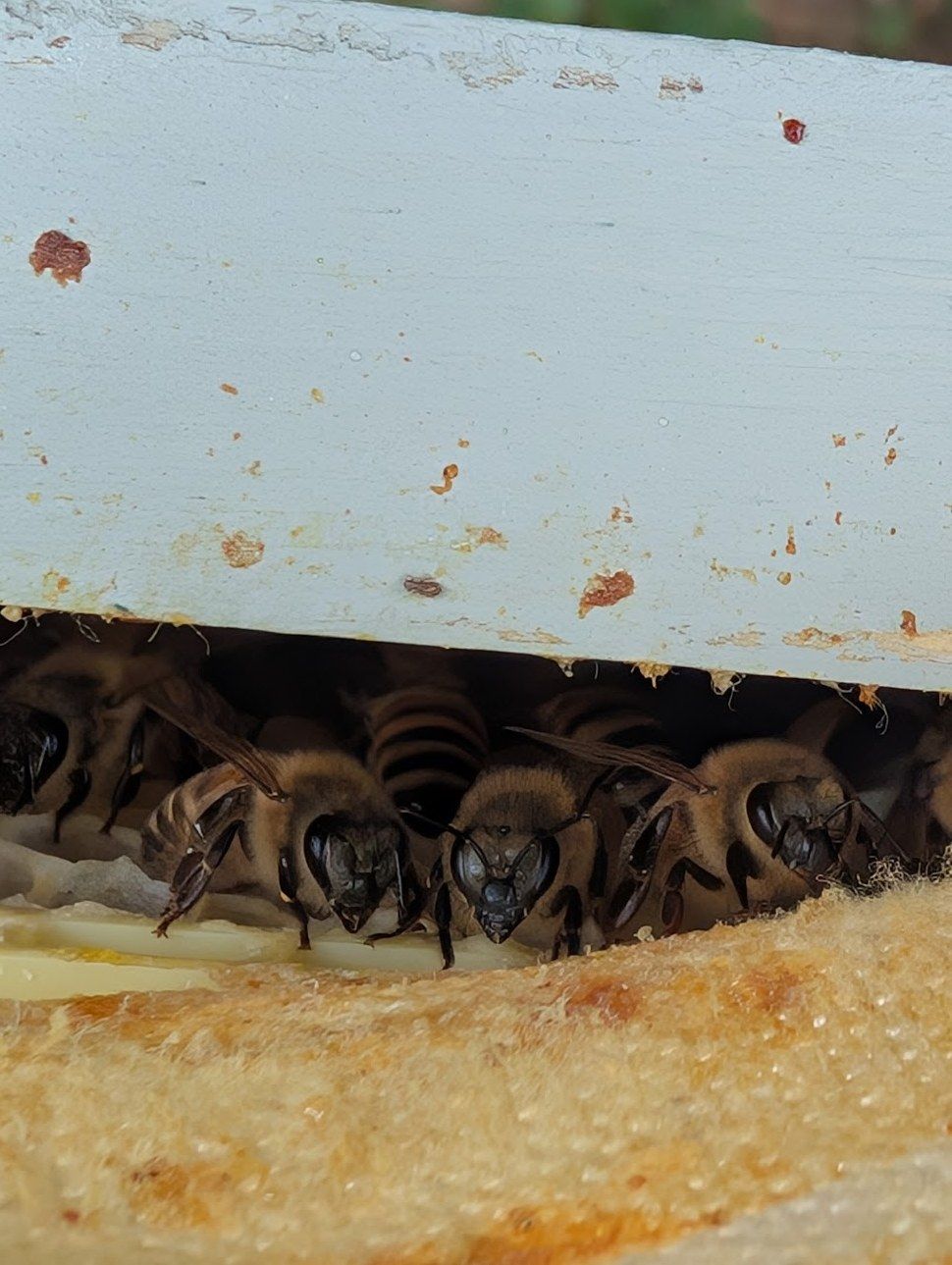
Honey bees clustered under the inner cover of one of our hives

Spring 2027 reservations · waitlist open

Locally bred honey bees from the heart of the Inland Northwest.

Overwintered nucs and locally bred queens, raised in the timber on ten forested acres outside Deer Park, Washington.

Why our bees

Our winters choose our bees.

Every nuc and queen we sell comes from a line chosen by our winters first, then by a season of work. How we breed

  1. 1 · Fall

    Into winter, outdoors

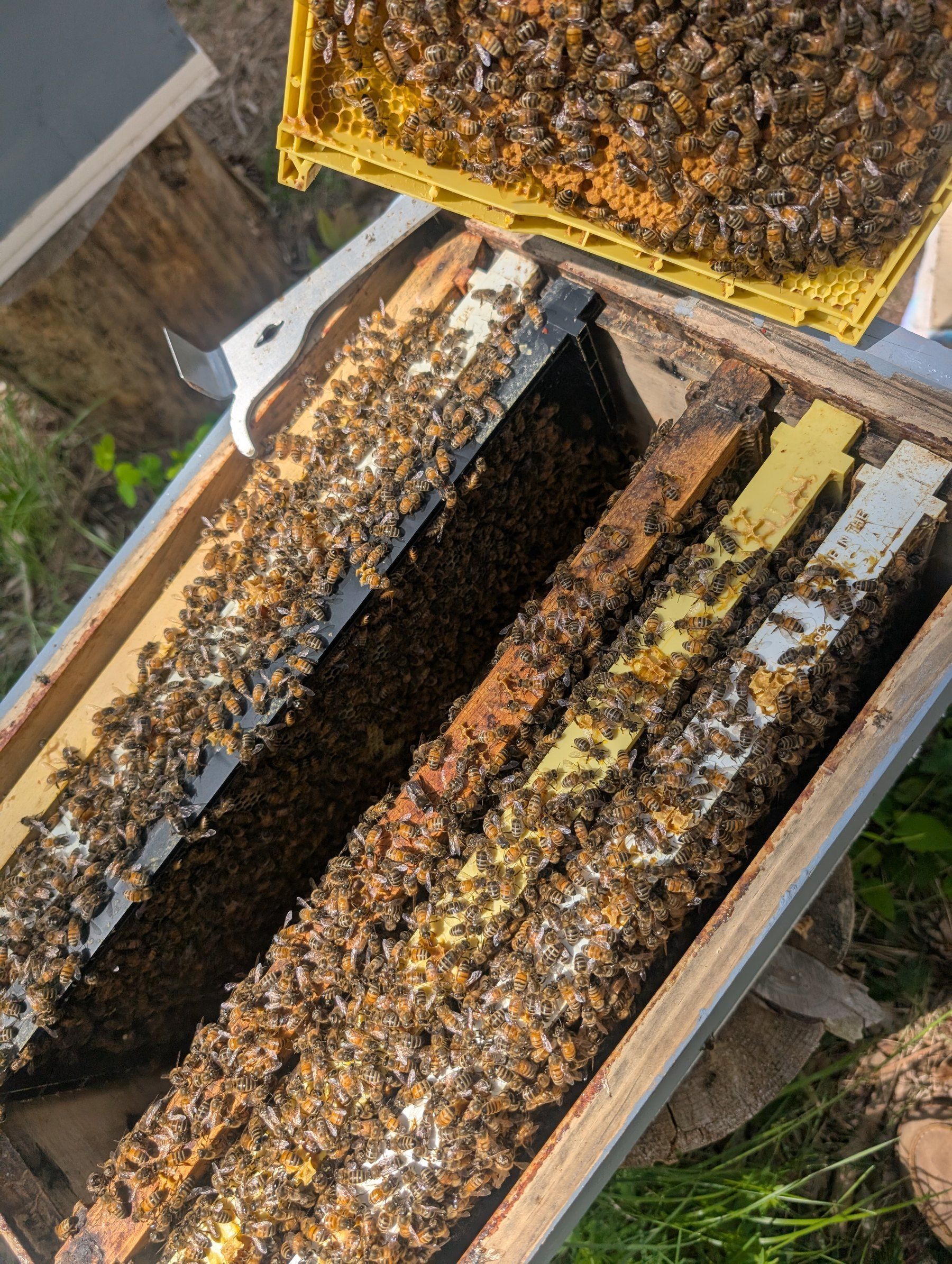
    Each nuc winters in an 8-frame box on its own log-round stand, with foam board on the lid.

  2. 2 · January

    The hard part

    At the Deer Park airport, January averages a low of 21°F, and about 34 days a year never get above freezing. (NOAA 1991–2020 normals)

  3. 3 · March

    The first cut

    A colony that comes through with a tight cluster, dry frames and a laying queen makes the first cut.

  4. 4 · The next season

    The second cut

    The best survivors work a full season as production colonies. Any that turn defensive or fall short are replaced. The rest become our breeders.

  5. 5 · Spring and summer

    Their daughters

    From the first drones in spring, we graft from those breeders, and the queens mate with local drones. Their daughters head our nucs and are the queens we sell.

What we sell

Two kinds of nucs. Built around what the Inland Northwest needs.
Read the nuc owner's guide →

Also: queenless nucs ($175) to boost a colony, and Arcadia Northern queens ($60) in season.

Where they fly

Bees are only as good as their forage. The forage here is exceptional.

Our hives sit on pine rounds back in the timber on our ten acres, each on the biggest round we can cut — off the duff, away from ground moisture, and steady when we work them.

But the bees don't stay home. Williams Valley is what they fly into — homesteads and small farms, hay fields, horse pastures, mountains on every side. Varied country means there's always something in bloom somewhere.

What's your home's potential?

Type your address into our free Bee Forage Check to see what blooms within flight range of your home, when the honey flow comes, and how your spot ranks. It doesn't keep the address you type.

Check your home's forage

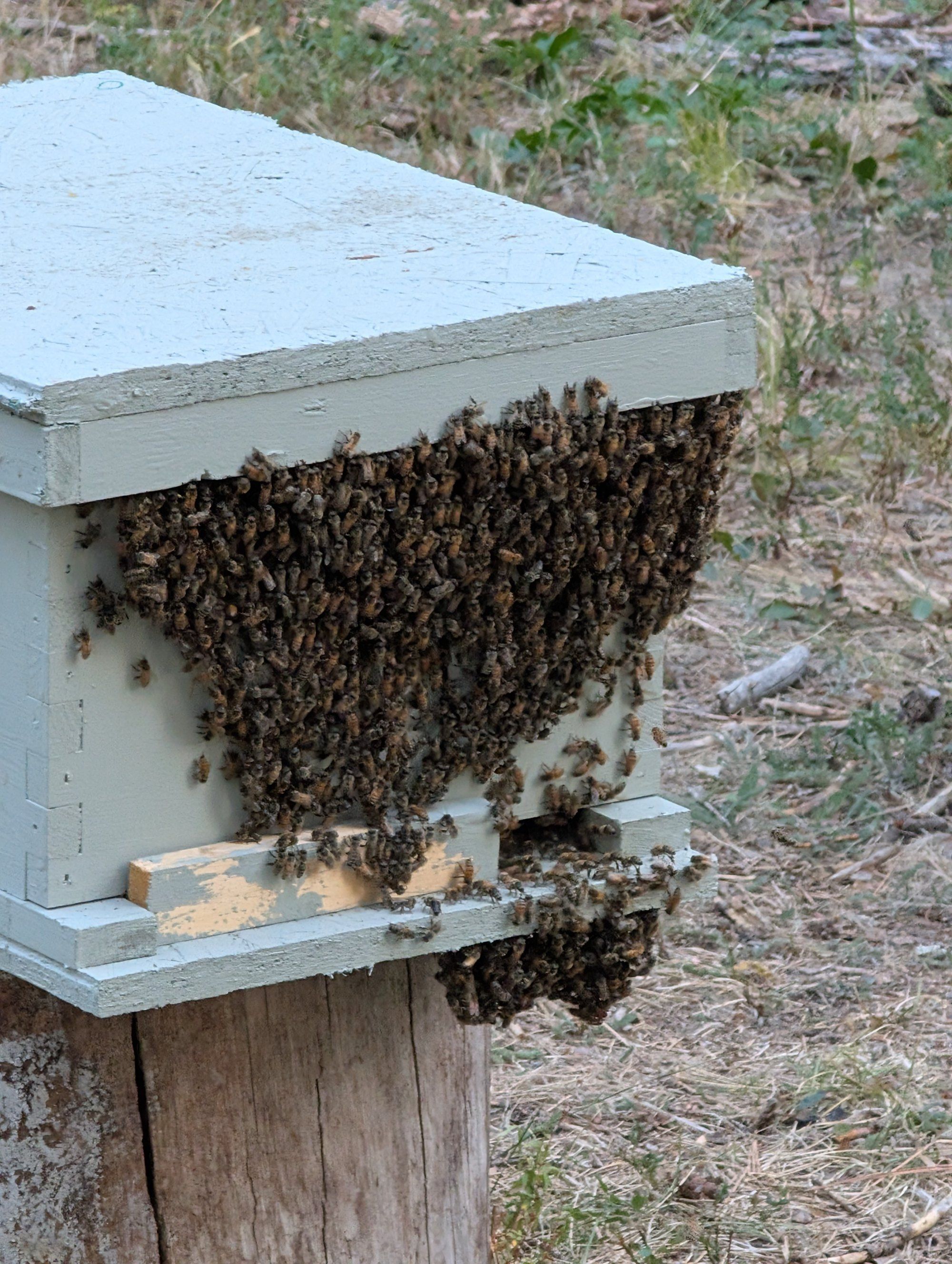
One of our hives bearding in the evening on a pine round in the forest
March
  • Willow
  • Cottonwood & aspen

First pollen from creekside willows, often with snow still on the ground

April
  • Dandelion
  • Willow
  • Clover
May
  • Canola
  • Clover
  • Willow

In canola years, the fields go yellow like paint

June
  • Canola
  • Clover
  • Alfalfa

The main flow starts mid-June

July
  • Alfalfa
  • Sunflower
  • Snowberry
  • Lavender

The main flow peaks, and a lavender farm three miles over the ridge blooms

August
  • Alfalfa
  • Sunflower
  • Knapweed
September
  • Alfalfa
  • Knapweed
  • Clover

A fall flow from mid-September tops up winter stores

October
  • Alfalfa
  • Knapweed

The last of the season

Crops rotate: canola and sunflowers aren't in bloom every year.

A steady run of nectar and pollen across the season instead of feast and famine — and the queens we breed from grew up on that abundance.

Wondering what your bees would find where you live? Check your own spot with our free Bee Forage Check.

Spring 2027

We're sold out for 2026. Get on the list for next spring.

Reservations open before pickup season. Waitlist members get first crack at slots before the public booking page goes live. No spam, no marketing — a confirmation now, and an email when booking opens.

Join the Spring 2027 waitlist